
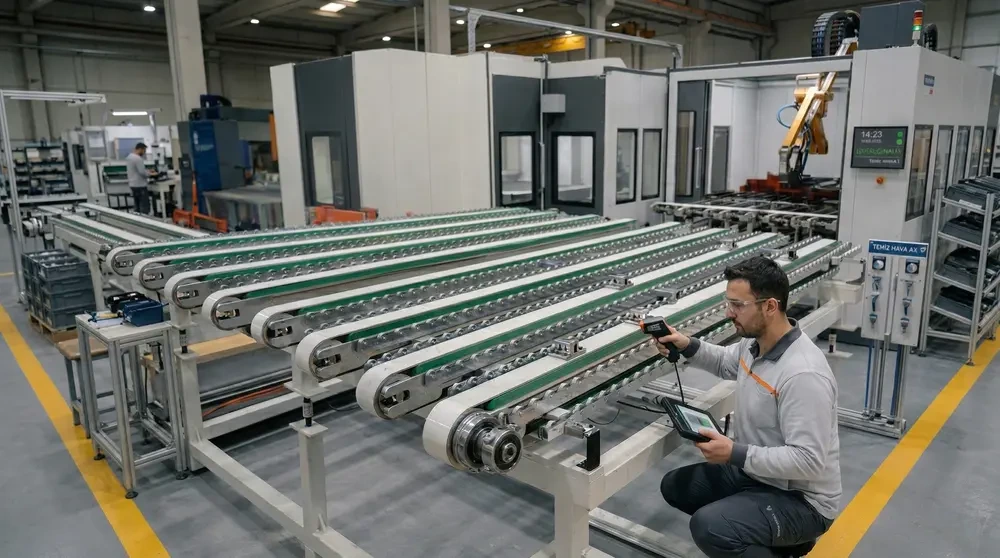
In production facilities, machine failures often seem to occur suddenly. However, many failures begin to show small warning signs before a complete shutdown occurs. Changes in sound, reduced performance, overheating, increased vibration, or deterioration in product quality are generally among the first of these signs.
The problem is that these symptoms can often go unnoticed during the daily pace of production. Since the machine continues to operate, the situation may not appear urgent. However, if a small warning sign is not noticed in time, it can lead to a more serious mechanical problem, prolonged downtime, and unexpected costs.
For this reason, rather than intervening only after a failure occurs, recognizing the first signs of a potential failure is a much more effective approach. Especially in businesses where production continuity is important, this awareness becomes one of the key parts of the maintenance process.
İçindekiler Tablosu
Failures Usually Do Not Start Suddenly
A machine coming to a complete stop is often the final stage of the process. Before that, the system gradually begins to give warning signs. Wear on components, loose connections, insufficient lubrication, pressure imbalances, or alignment problems initially create minor effects. If these effects are not noticed, the failure becomes more serious.
For this reason, it is not enough to limit the maintenance approach to simply “intervene when it breaks down.” What really matters is understanding the machine’s normal operating behavior and monitoring changes in that behavior.
Early Signs to Pay Attention To
Changes in Sound
Machines always have a certain sound pattern while operating. Operators and maintenance teams become familiar with this pattern over time. Grinding noises, knocking, high-pitched humming, or unusual metallic sounds are often signs of a mechanical problem.
Problems with bearings, belts, fasteners, or moving parts may first become noticeable through a change in sound. For this reason, a statement such as “the machine is running, but it sounds different” should not be taken lightly.
Increased Vibration
Vibration is often one of the early warning signs. Uneven load distribution, loose parts, alignment problems, or worn components can increase vibration levels. A condition that appears minor at first may damage other components over time.
Vibration does not only affect machine life. It can also reduce production accuracy. This becomes more noticeable particularly in processes where dimensional accuracy is important.
Overheating and Temperature Differences
Temperatures above normal levels in machine components should be evaluated carefully. Excessive friction, insufficient lubrication, overloading, or certain imbalances in hydraulic systems can cause an increase in temperature.
Although some businesses try to check these changes only by touch, regular temperature monitoring provides much more reliable results. This is because an increase in temperature can be an early warning sign of many types of failure.
Reduced Performance
Even if a machine has not completely broken down, it may first experience a loss of performance. Reduced operating speed, longer cycle times, changes in response time, or higher energy consumption for the same task are examples of this.
Such situations are often overlooked from a production planning perspective. However, a loss of performance may be an indication of a larger technical problem that is approaching.
Deterioration in Product Quality
Sometimes the first sign of a failure appears not in the machine itself, but in the work being produced. Dimensional deviations, surface defects, recurring quality problems, or results outside the required standards may indicate problems related to the machine’s settings, pressure, balance, or mechanical condition.
For this reason, quality control data is important not only for evaluating the final product, but also for understanding machine condition. In sheet metal processing, recurring flatness and dimensional problems are often related to the condition of the sheet leveling machine in the line.
Why Is Operator Observation So Important?
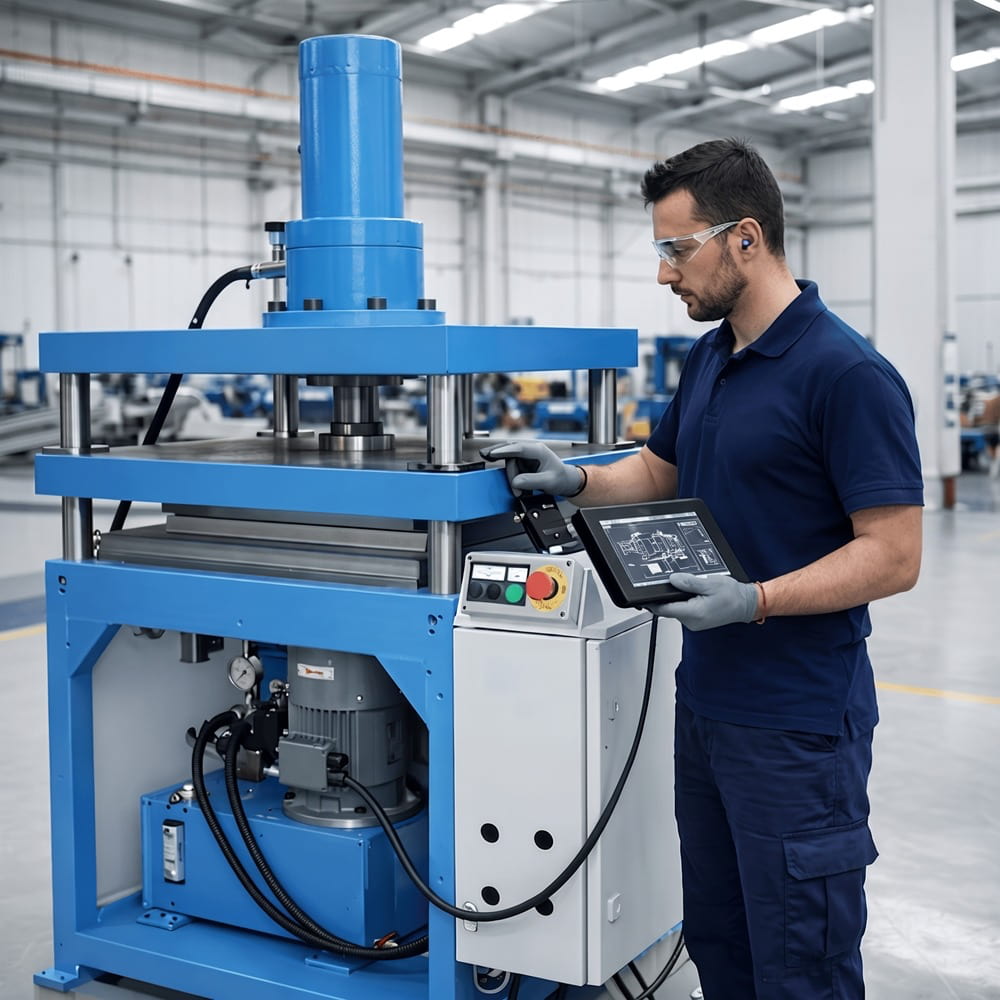
The people working directly with the machine are often the first to notice a change. This is because they follow its daily operating pattern more closely than anyone else. Even a simple system that records the observations of the team can make a significant difference in identifying warning signs before a failure occurs.
The important point here is not to leave the observation at the level of personal interpretation. It is more useful to proceed with clear questions such as: Has the sound changed? Has vibration increased? Has the cycle time become longer? Is there an oil leak?
Maintenance Requires Monitoring, Not Just Intervention
In many businesses, the maintenance process focuses mainly on repairs after a failure occurs. However, regular monitoring is one of the most important steps in reducing unplanned downtime. Daily checklists, weekly reviews, and periodic inspection plans for critical components provide significant benefits in this respect.
Especially on heavily used production lines, neglecting small checks can later lead to much greater losses of time.
You may also like: How to Create a Preventive Maintenance Schedule for Presses
Proper Machine Selection and Proper Use Should Be Considered Together
Maintenance alone is not enough to reduce the risk of failure. The machine selected must be suitable for the production requirements, operators must use it correctly, and maintenance discipline must become part of the process. Using the wrong capacity, irregular loading, or unsuitable operating conditions can increase the likelihood of failure.
At this point, the focus should not only be on the initial investment cost, but also on the machine’s long-term performance. Meşe Makina brings production strength together with proper planning and the right machine approach. For this reason, when selecting a machine, the long-term operating conditions of the business should be considered alongside its day-to-day requirements.
Conclusion
Machine failures often give warning signs in advance. Changes in sound, increased vibration, temperature differences, reduced performance, and deterioration in quality are among the most common of these signs. Detecting these symptoms early can reduce both maintenance costs and unplanned production losses.
If production continuity is the goal, it is necessary to establish a system that monitors warning signs rather than following an approach that waits for a failure to occur. Taking small warning signs seriously at the right time is one of the most practical ways to prevent larger problems.
If you are planning new investments for your press shop, you can review our press shop equipment range or contact us for a technical assessment.

Leave A Comment