
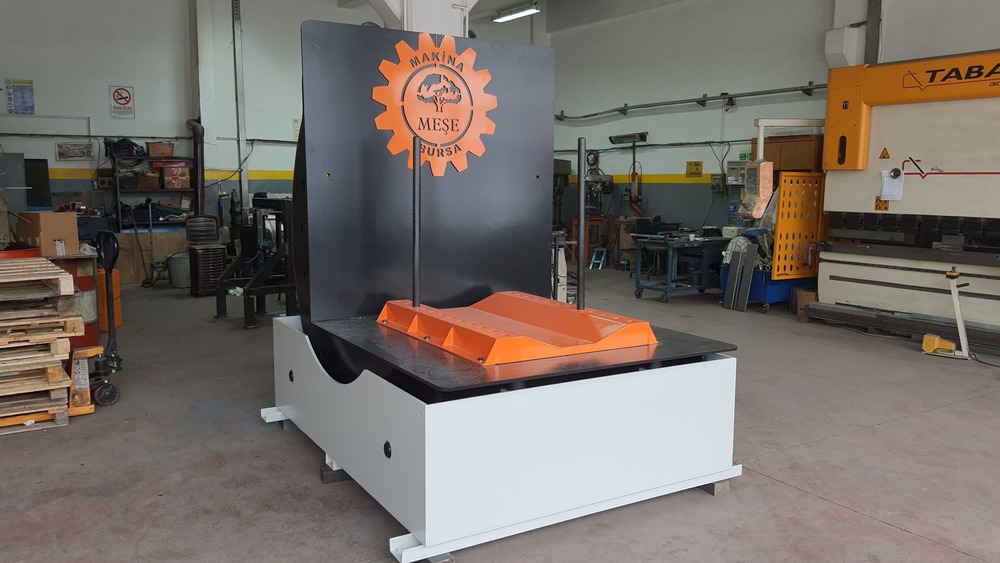
Turning a steel coil or press die weighing several tons requires more than sufficient lifting capacity. The load’s center of gravity, support points, and the forces generated during rotation must also remain under control. Incorrect load positioning or uncontrolled movement can put workers at risk and cause damage to equipment and materials.
Heavy-duty material turning and tilting machines allow these operations to be carried out through a controlled sequence of movements. However, safe operation depends on several factors working together: appropriate machine selection, protective systems, operator training, and regular maintenance.
İçindekiler Tablosu
What Are Material Turning and Tilting Machines, and Where Are They Used?
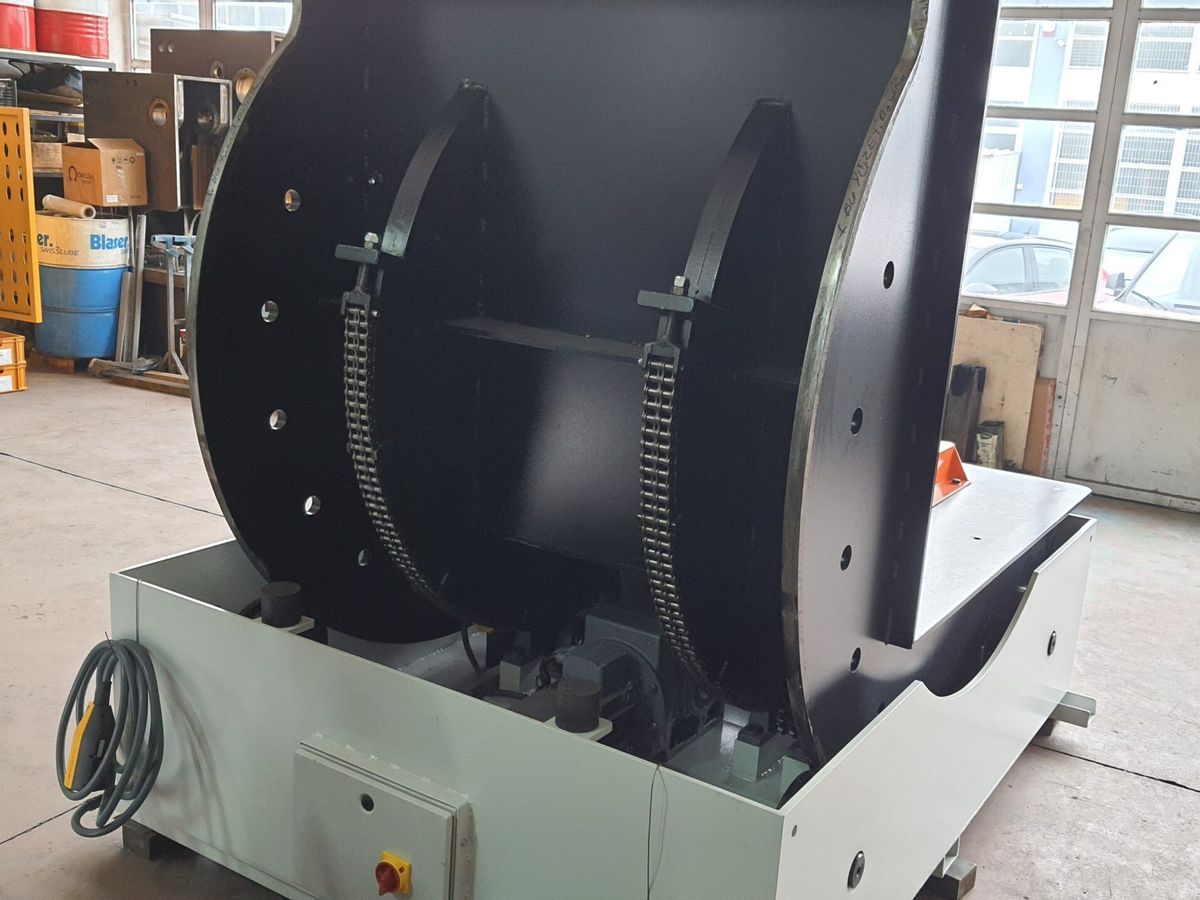
A material turning machine is designed to rotate heavy loads, such as coils, dies, or blocks, through specified angles to position them for processing, handling, or maintenance. The load is placed on the machine using auxiliary equipment such as a crane or forklift, while the machine’s mechanism performs the turning operation.
Coil upenders, which are also part of Meşe Makina’s product range, are used to turn steel coils between horizontal and vertical positions. Die turning machines help position heavy dies for maintenance, assembly, and inspection.
Selecting the right machine involves more than considering load capacity. The load’s dimensions, geometry, center of gravity, and support surfaces must also be compatible with the machine’s operating limits.

What Are the Main Risks During Material Turning?
As a load rotates, the position of its center of gravity changes relative to the machine’s support points. As a result, a load that appears stable at the beginning of the operation may shift or lose contact with its support surface as the movement progresses.
The main risks include:
- Crushing and entrapment: Hazardous areas can develop between the moving platform, the load, and the fixed machine structure.
- Load slipping or tipping: Incorrect positioning, inadequate securing, or exceeding the machine’s capacity limits can cause instability.
- Uncontrolled movement: Hydraulic or mechanical failures may result in a loss of control over rotation speed or load position.
- Unexpected startup: The machine may start unintentionally during cleaning, adjustment, or maintenance.
- Loading and unloading accidents: Collisions, crushing incidents, or falling loads may occur in the working area between the machine and lifting equipment.
Risk assessment should not be limited to the turning movement itself. Every stage, from transporting and loading the material to removing it after the operation, must be considered.
Which Machinery Safety Standards Should Be Considered?
In Türkiye and the EU, the Machinery Directive 2006/42/EC (implemented in Türkiye as the Machinery Safety Regulation) establishes essential health and safety requirements and the conformity assessment framework for machinery within its scope. CE marking is part of this framework. When purchasing machinery, the declaration of conformity and operating instructions should also be reviewed alongside the CE marking.
Technical standards provide guidance on incorporating safety requirements into machine design. Some of the key standards that may apply to material turning machines include:
| Standard | Relevant Safety Requirements |
|---|---|
| TS EN ISO 12100 | Hazard identification, risk assessment, and risk reduction |
| TS EN ISO 13849-1 | Design of safety-related parts of control systems |
| TS EN ISO 13850 | Design principles for emergency stop functions |
| TS EN ISO 4413 | Safety requirements for hydraulic systems and components |
These standards address complementary aspects of machinery safety, including design, control systems, emergency stopping, and hydraulic safety. The applicable standards and required safety functions should be determined according to the machine’s design and risk assessment.
For manufacturers placing machinery on the EU market, Regulation (EU) 2023/1230, which replaces Machinery Directive 2006/42/EC, will generally apply from 20 January 2027.
What Should You Look for in a Safe Material Turning Machine?
Machine safety should not depend solely on the operator’s attention. The priority should be to eliminate or reduce hazards during the design stage.
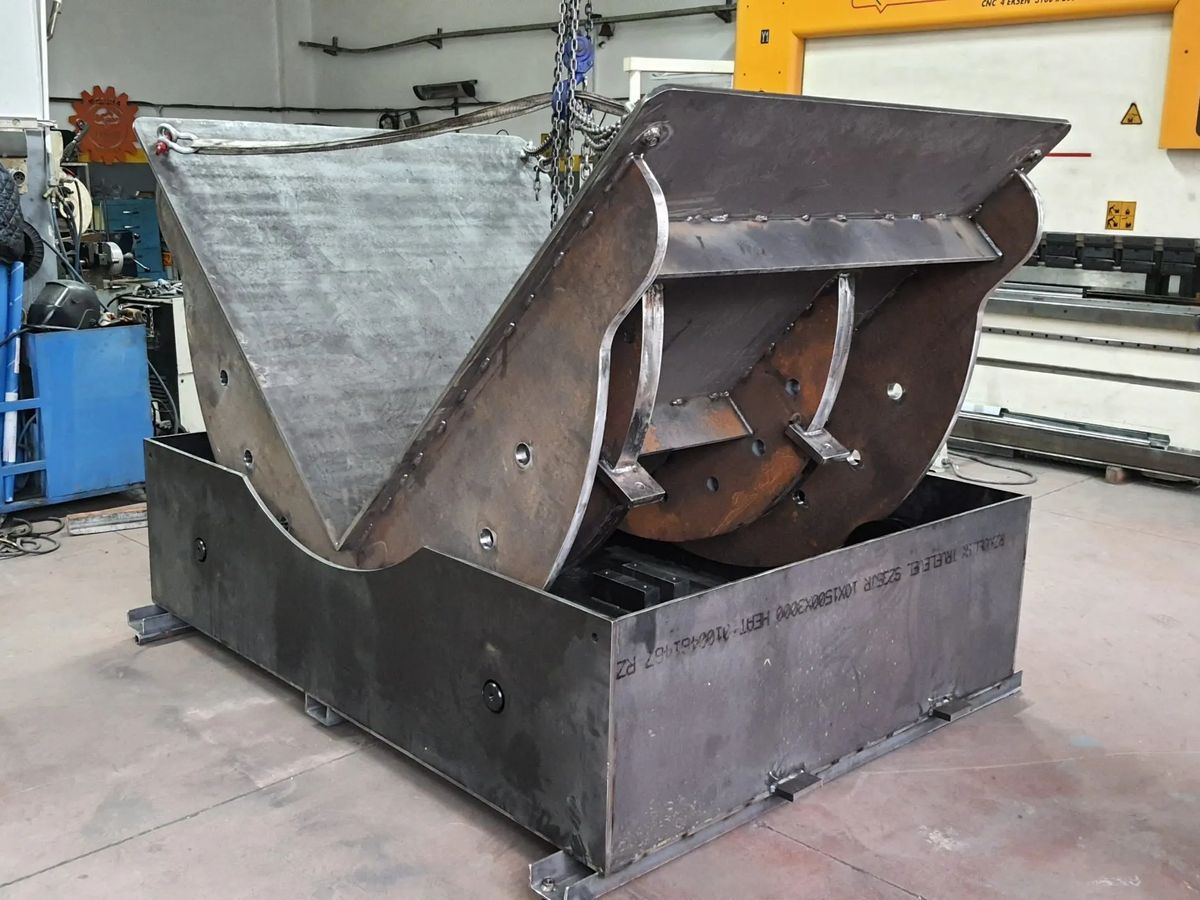
Load-appropriate structure and support system: The platform, frame, and load-supporting components must be designed for the intended operating conditions. Capacity calculations should also account for load positioning and the forces generated during movement.
Secure load positioning: Stops and suitable securing devices should be selected to prevent the material from slipping during rotation. It should never be assumed that every load will remain safely in place under its own weight.
Controlled movement and hydraulic safety: The rotation speed must allow the load to remain under control throughout the operation. Load-holding solutions designed to address hydraulic failures should be selected according to the hydraulic circuit. The presence of a single valve does not guarantee safety under every possible failure condition.
Restricted access to hazardous areas: Guards, safety interlocks, or suitable sensing systems should be used according to the risk assessment. Solutions such as two-hand controls should not be considered sufficient on their own to protect other workers in the surrounding area.
Accessible emergency stop controls: Emergency stop devices must be easy to reach. However, emergency stopping does not replace protective systems or the isolation of energy sources before maintenance.
Operator Training and Safe Operation
Operators must understand more than the machine’s rated capacity. They should also know how different loads must be positioned and how to respond to abnormal operating conditions. Written operating procedures should be prepared based on the manufacturer’s instructions and the company’s risk assessment.
Before starting an operation, the load’s weight and dimensions should be verified, and the support surfaces, securing devices, and working area should be checked. Ensuring that lifting equipment is placed in a safe position where it cannot interfere with the turning movement is also part of this process.
During operation, workers must never attempt to adjust the load by hand or enter crushing and entrapment zones. If slipping, unusual noises, or irregular movement occur, the operation should be stopped and should not resume until the cause has been identified. Personal protective equipment should also be selected according to the risks present in the working area.
Maintenance and Periodic Inspections
Hose wear, loose connections, and sensor failures can affect machine safety over time. A maintenance plan should therefore be established based on the manufacturer’s instructions, operating frequency, and working environment.
Inspections should cover hydraulic leaks, hoses and connections, mechanical wear, load-holding components, and safety functions. Routine maintenance and legally required periodic inspections are not interchangeable. The scope and frequency of periodic inspections must be determined according to the national regulations where the equipment is used (in Türkiye, the Regulation on Health and Safety Conditions in the Use of Work Equipment).
Before maintenance begins, electrical and hydraulic energy sources must be safely isolated, stored energy must be brought under control, and unintended restarting must be prevented. Appropriate mechanical support must also be provided for components that could move under the force of gravity.
Choosing the Right Machine for a Safer Working Process
When selecting from Meşe Makina’s range of heavy-duty material turning and tilting machines, factors such as load geometry, loading method, protective systems, and maintenance access should be considered alongside capacity. A solution suited to the actual operating conditions of a facility makes it easier to integrate safety measures into everyday production.
To evaluate the most suitable turning solution for your operation, you can share the load weight, dimensions, required turning angle, and operating frequency with Meşe Makina.

Leave A Comment