
İçindekiler Tablosu
How to Create a Preventive Maintenance Schedule for Presses
Downtime on a press line does not only mean lost production time for the press itself. Material feeding stops, scrap removal may become blocked, downstream operations are left waiting, and delivery schedules are disrupted. In industries operating under tight delivery deadlines, such as the automotive supply sector, a single unplanned shutdown can put an entire day’s production target at risk.
The purpose of preventive maintenance is to make these stoppages more predictable. Instead of responding only after a failure occurs, wear, looseness, lubrication problems and misalignment should be identified before they reach a level that interrupts production.
At Meşe Makina, we observe the practical effects of preventive maintenance across different production scenarios involving the special-purpose hydraulic presses and press shop equipment we manufacture. In this article, we explain how to establish an effective preventive maintenance schedule, which checks can be planned at different intervals, and why many maintenance programmes eventually remain only on paper.
Periodic Inspection and Preventive Maintenance Are Not the Same
Before creating a maintenance schedule, an important distinction must be clarified, as these two processes are often confused in industrial facilities.
A periodic inspection is the assessment and documentation, by authorised personnel, of whether work equipment is safe and suitable for operation. Under Türkiye’s Regulation on Health and Safety Conditions in the Use of Work Equipment, employers are responsible for ensuring that their equipment is maintained and that the required periodic inspections are carried out.
Preventive maintenance, on the other hand, is a programme established by a company to maintain production reliability. Its purpose is not to wait for a breakdown, but to identify the conditions that could lead to failure and extend the equipment’s service life.
A satisfactory periodic inspection report does not guarantee that a press will not experience a mechanical or hydraulic failure several months later. Likewise, regular maintenance does not replace legally required periodic inspections. These two processes should therefore be monitored separately within the maintenance plan.
Before Creating the Schedule: Equipment Inventory and Criticality
A programme that attempts to maintain every press at the same frequency and to the same extent will quickly become unsustainable. The first step is to list all equipment, and the second is to determine its criticality.
The following basic information should be recorded for each press:
- Make and model
- Tonnage
- Year of manufacture
- Operating hours or stroke count
- Dies used on the press
- Failure history
- Critical spare parts
- Inspection and maintenance intervals specified in the manufacturer’s maintenance manual
The equipment should then be classified according to criticality. Tonnage alone does not make a press critical. The main question is how much production would be affected if that press stopped.
The following questions can help determine criticality:
- Does the entire production line stop when the press stops?
- Is another machine available that can perform the same operation?
- Are critical spare parts in stock, and how long would replacements take to obtain?
- Does the equipment perform a safety-critical function?
- Are there recurring problems in its maintenance and failure history?
Critical presses should be monitored more frequently and in greater detail. A lightly used press with backup capacity does not require the same level of maintenance. Without this distinction, the maintenance team may spend time on unnecessary checks and fail to give genuinely critical equipment the attention it requires.
How to Create a Time-Based Maintenance Schedule
A preventive maintenance schedule should be divided into daily, weekly, monthly and longer-term intervals based on the manufacturer’s instructions, the equipment’s operating conditions, usage intensity and the company’s failure history.
The intervals below provide an example maintenance framework. The exact maintenance frequency for each press should be determined according to the manufacturer’s recommendations and actual operating conditions.
Start-of-Shift and Daily Checks
The operator should be responsible for this stage, and the inspection should take no more than a few minutes.
Before operation begins, the equipment should be visually inspected. If any cracks, deformation, looseness or excessive wear that could affect safe operation are identified, the equipment should not be operated until it has been assessed by authorised personnel.
Daily checks should cover:
- Oil levels
- Air or system pressure
- Emergency stop buttons
- Two-hand control system
- Light curtains and other safety equipment
- Unusual noise or vibration
- Visible oil or air leaks
- Condition of die fastening components
- Cleanliness of the working area and scrap removal zone
Short, clear checklists are more effective at this stage than lengthy forms.
Weekly Checks
Weekly maintenance involves a more detailed inspection than daily checks. It is not enough to confirm that the lubrication system is full; it must also be verified that lubricant is actually reaching the correct points.
Filters, strainers and potential leakage points should be inspected. Scrap removal routes, feeding equipment and moving areas should be cleaned of accumulated dirt and metal particles.
One of the most valuable aspects of weekly inspection is the early detection of leakage. A small oil stain on the floor can often be the first sign of a hydraulic or pneumatic failure that may otherwise emerge several months later.
Monthly Checks
Monthly maintenance focuses on components that affect the machine’s operating accuracy and the integrity of its connections. Depending on the manufacturer’s instructions, the following should be checked:
- Tightness of critical fasteners
- Clearances in slides and guides
- General condition of the electrical cabinet, terminals and connections
- Functional operation of safety circuits
- Operating condition of sensors
- Appearance of the oil and signs of contamination
- Condition of hoses, fittings and connection points
The important point is not to apply the same checklist to every press, but to tailor it to the machine type.
Quarterly and Six-Monthly Checks
For maintenance carried out at longer intervals, the machine should be taken out of production for a specified period so that a comprehensive inspection can be performed.
At this stage, bearings and slide clearances, the frame and main connections, hydraulic or pneumatic system components, drive system components, sensors and measuring devices, cooling systems, filters and safety systems should be inspected in detail.
If oil analysis is used, its sampling interval should also be incorporated into this plan.
Annual Checks
Unless a different interval is specified in the applicable standards, mechanical and hydraulic presses should undergo a periodic inspection at least once a year.
The annual review should cover not only the legally required inspection but also the maintenance and failure records from the previous year:
- Which component caused the most downtime?
- Which failures occurred repeatedly?
- Which maintenance tasks were performed more frequently than necessary?
- Which inspections successfully detected failures in advance?
- Which critical spare parts should be kept in stock?
This assessment should directly shape the following year’s maintenance programme.
Maintenance Tasks Specific to Mechanical Presses
In eccentric and other mechanical presses, maintenance should focus on the mechanisms that generate, transmit and safely stop motion.
The clutch and brake system is one of the most critical areas. Brake lining wear, air pressure, braking performance, stopping time and the stopping position of the ram should be monitored regularly. An increase in stopping time affects not only production accuracy but also the safe operating distance of the safety systems.
The following components also require regular inspection:
- Flywheel and bearings
- Connecting rod mechanism
- Stroke adjustment system
- Slides and guides
- Counterbalance cylinders
- Counterweight systems
- Overload protection systems
- Lubrication points
Even minor clearance or misalignment in a mechanical press can eventually affect both product quality and die life.
Maintenance Tasks Specific to Hydraulic Presses
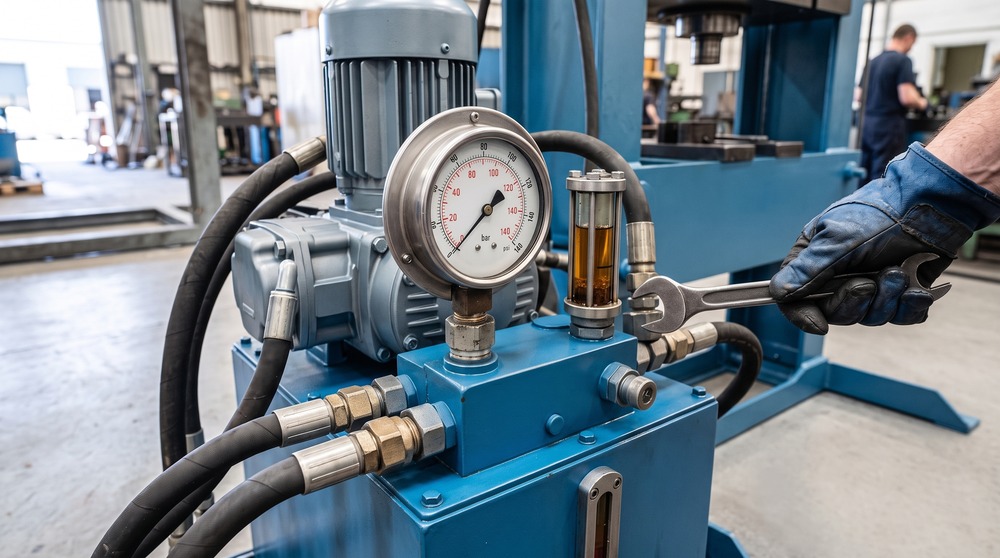
Maintenance of hydraulic presses centres on the hydraulic fluid and the components that control it. Oil level, temperature, cleanliness, water content and viscosity are all critical to system reliability.
Filters should be replaced at the intervals specified by the manufacturer, and filter clogging indicators, where fitted, should be monitored regularly. The following should also be included in the maintenance plan:
- Sealing components
- Hoses
- Fittings
- Pumps
- Pressure-control and safety valves
- Cooling system
- Cylinders
- Pre-charge pressure in systems equipped with accumulators
Oil analysis is one of the most valuable sources of data for condition-based maintenance of hydraulic presses. Particle counting and water-content measurement make it possible to identify conditions that could cause wear in pumps and other components before a failure occurs.
The objective is not simply to replace the oil, but to determine why the system became contaminated or why the oil deteriorated.
The Schedule Should Not Cover Only the Press
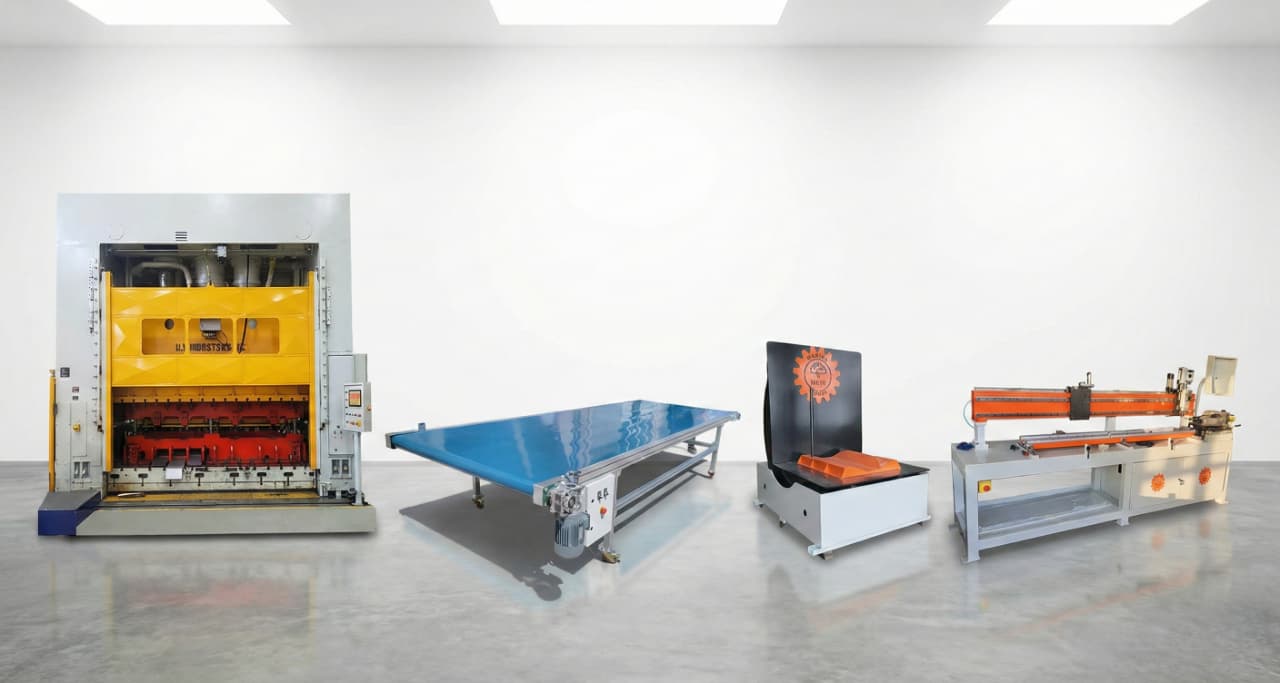
One of the most common mistakes in press shops is to create a maintenance schedule that covers only the press itself. In practice, a significant proportion of line stoppages originate in peripheral equipment.
On the infeed side, destacker units, sheet-separating magnets, roller tracks and feeding systems should be included in the schedule. On the outfeed side, scrap handling systems, conveyors and packing units should be monitored with the same level of discipline. Press guarding systems, light curtains and poka-yoke equipment are also integral parts of the maintenance programme.
A broken conveyor belt or blocked scrap chute can bring even a 400-ton press to a complete stop. The maintenance schedule should therefore be planned around the entire production line rather than individual machines.
Safety During Maintenance
Maintenance work on presses is one of the highest-risk activities in an industrial workshop.
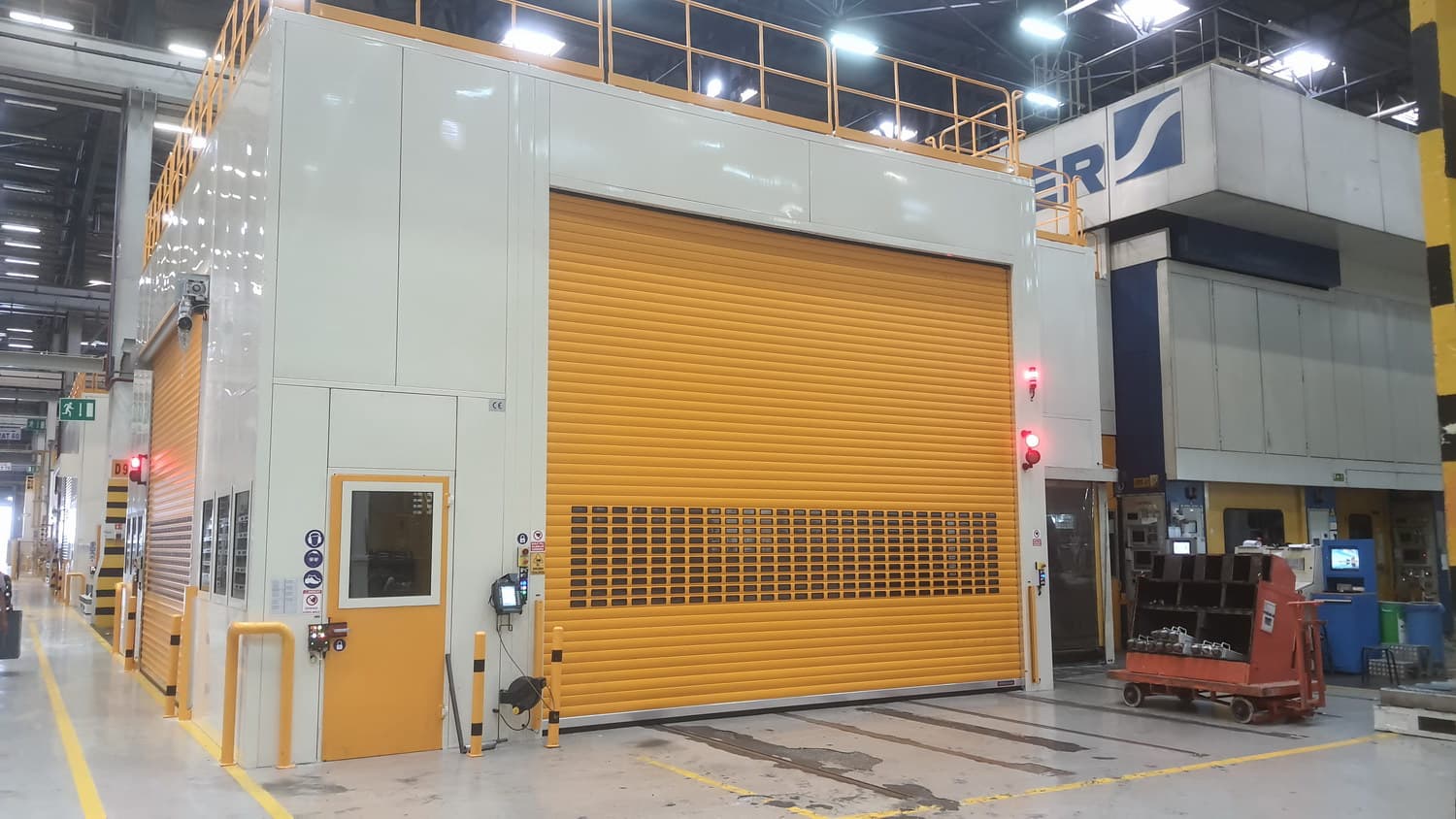
Before maintenance begins, electrical, hydraulic and pneumatic energy sources must be isolated. Stored energy in the system must be safely released or brought under control. Lockout/tagout procedures must be applied to prevent the equipment from being restarted unintentionally.
When work is to be carried out beneath the ram, no work should begin until an appropriate mechanical safety block or ram-support device is in place. It is not safe to work beneath the ram by relying solely on hydraulic pressure, the clutch-brake system or the control circuit.
These steps should not be left to verbal instructions or workplace habits. They should be documented in a written procedure and placed at the beginning of the maintenance form.
How to Ensure the Schedule Is Actually Followed
Many companies create maintenance programmes, but implementation begins to weaken after a few months. One of the main reasons is that the programme is more complicated than necessary.
Every maintenance task should have a clearly identified person responsible for it. Referring only to the “maintenance team” is not specific enough. It should be clearly defined who performs the inspection, who approves it and who takes action when a problem is identified.
Forms should be kept concise and should collect only information that will actually be used. The following details should always be recorded:
- Work performed
- Problem identified
- Part replaced
- Maintenance duration
- Whether the failure occurred again
- Date of the next inspection
Without these records, it is impossible to determine whether the maintenance programme is effective.
The schedule should not be treated as a fixed document. Over time, failure records reveal which items need to be inspected more frequently and which can be checked less often. A programme that is not reviewed against historical data at least once a year will gradually lose touch with actual production conditions.
Conclusion
An effective preventive maintenance schedule is built on an accurate equipment inventory, realistic criticality classification, maintenance intervals that comply with manufacturers’ instructions, machine-specific inspection tasks and uncompromising safety procedures. Its scope should extend beyond the press itself to every item of peripheral equipment capable of stopping the production line.
The objective in mechanical or hydraulic systems is not to carry out as much maintenance as possible, but to perform the right intervention on the right equipment at the right time.
Drawing on its field experience in manufacturing special-purpose hydraulic presses and press shop equipment, Meşe Makina develops production solutions that consider both the press and its peripheral equipment as an integrated system.
For more information about equipment, guarding, feeding and automation solutions suitable for your press line, please contact Meşe Makina.

Leave A Comment