
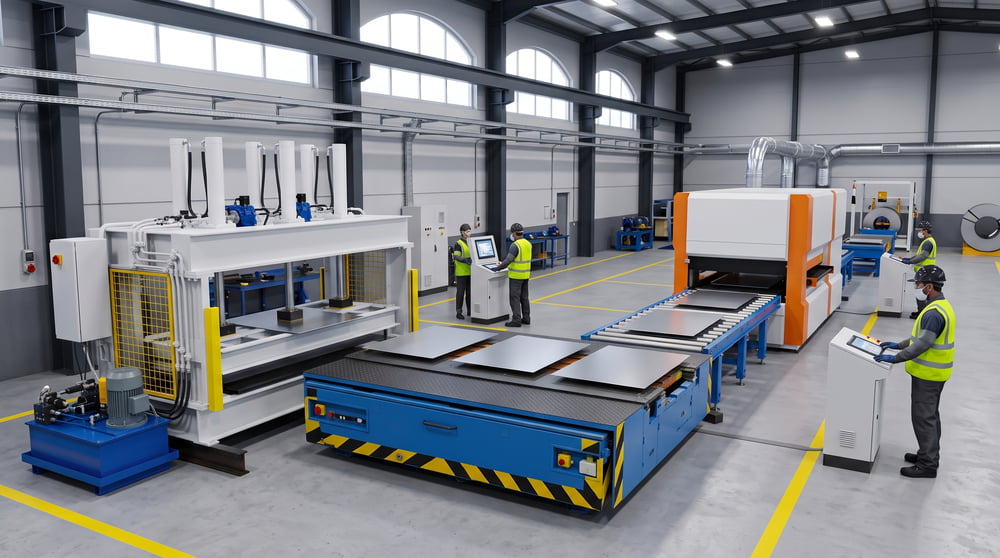
Building an efficient production process in a press shop is not simply about using powerful machinery. What really matters is selecting machines that support the production flow, match operational requirements, and do not make the process unnecessarily complicated. A significant portion of the time losses experienced on the shop floor often results not only from operator errors but also from unsuitable machine selection.
Although a machine may appear to operate independently, it is actually part of the entire production system. Feeding, straightening, cutting, guiding, handling, and subsequent processing stages are all interconnected. For this reason, every machine selected for a press shop affects not only its own task but also the entire workflow connected to it.
This is where Meşe Makina’s approach becomes particularly important. Selecting the right machine is not only necessary to meet current production requirements but also to establish a more organized, faster, and better-controlled workflow.
İçindekiler Tablosu
What Are the Main Causes of Slow Workflow?
In press shops, production may sometimes fail to progress at the desired pace even when the necessary machinery is available. In many cases, the problem is not insufficient capacity but a lack of compatibility between different stages of the process. If one machine operates quickly while another cannot keep up, if the material does not move smoothly through the line, or if the operator must constantly intervene manually, the overall production flow slows down.
This becomes particularly noticeable in sheet metal processing operations. If the material does not enter the line properly, if straightening is insufficient, or if the feeding system does not operate consistently, time is lost in the following stages. These losses may appear minor individually, but they can become significant by the end of the working day.
For this reason, when selecting machinery for a press shop, it is not enough to ask whether the machine simply performs its function. The more important question is how effectively it supports the overall workflow.
Why Does the Right Machine Selection Improve Production Speed?
A properly selected machine reduces the workload on operators, improves material flow, and helps production proceed more consistently. This not only shortens processing times but also reduces the risk of errors.
For example, when a system is not suitable for the production process, the operator may need to constantly check settings, correct material movement, or manually resolve minor problems that arise during operation. These repeated interventions are often hidden causes of production delays.
By contrast, a machine with the appropriate capacity and configuration helps create a smoother process. Material moves through the line more consistently, production continues with fewer interruptions, and overall shop-floor operations become easier to control.
With this approach, Meşe Makina does more than simply provide machinery; it focuses on solutions designed to improve the efficiency of the overall production flow.
Why Is Machine Capacity Alone Not Enough?
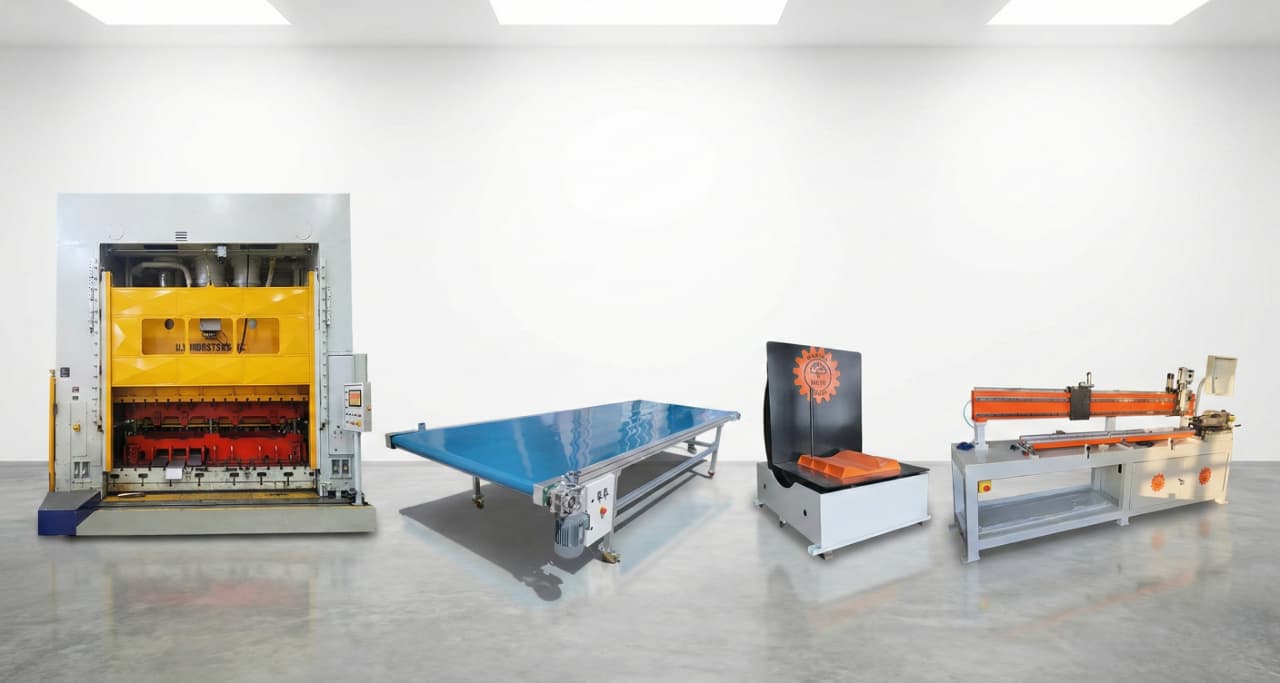
One of the most common mistakes when selecting machinery is evaluating equipment only in terms of speed or tonnage. In a press shop, however, the objective is not simply to use a powerful machine but to use the right machine for the specific application.
A technically powerful machine will not necessarily operate efficiently in every production environment. Factors such as daily production volume, the characteristics of the material being processed, production frequency, the existing line configuration, and how operators use the machine must all be taken into account.
Otherwise, an investment that appears impressive on paper may fail to deliver the expected efficiency in actual production. This can disrupt workflow and extend the payback period.
For this reason, the right machine should be selected not only according to current requirements but also according to the actual structure and demands of the production process.
What Should Be Considered When Selecting Machinery to Improve Workflow?
Several key factors should be considered when selecting machinery for a smoother and more efficient production process in a press shop.
Compatibility with the Production Line
The machine should operate in harmony with the existing production system. A solution that speeds up one section of the line while creating bottlenecks elsewhere may appear efficient initially but can cause problems in the long term.
Compatibility with Material Characteristics
The thickness, hardness, and form of the material being processed are important factors in machine selection. Equipment that is not suitable for the material can negatively affect both product quality and production flow.
Ease of Operation
Complex operating procedures can lead to unnecessary time losses in daily production. Systems that are easier to understand, operate, and control help maintain a smoother workflow.
Consistent Performance
A machine should maintain its performance not only during initial operation but also under continuous production conditions. Equipment that requires frequent adjustments can interrupt workflow and reduce overall productivity.
Suitability for Future Requirements
Machine selection should not be based solely on current order volumes. Potential increases in production, new types of work, and future capacity expansion should also be considered.
How Does the Wrong Machine Selection Affect a Press Shop?
The effects of selecting the wrong machine do not always appear as major breakdowns. Sometimes the consequences are less obvious but more persistent. Frequent minor stoppages, inconsistent material flow, excessive dependence on operator intervention, and repeated adjustment requirements can gradually disrupt the production process.
These problems affect more than day-to-day productivity. They can also create difficulties in delivery schedules, production planning, and overall operational discipline. Even when everyone on the shop floor appears to be working continuously, the process may still fail to achieve the expected level of efficiency.
For this reason, machine selection in a press shop should not be viewed simply as a technical purchasing decision. It is a decision that directly influences the speed, stability, and organization of the entire production process.
Conclusion
Improving workflow in a press shop does not always require adding more machines. In many cases, what is needed is the right equipment to support the production process effectively. Machines that are compatible with the production line, suitable for the material, easy to operate, and capable of maintaining a balanced production flow can directly improve overall shop-floor efficiency.
Machine selection should therefore be considered not only as a technical matter but also as an important part of production planning. The right machine does more than perform a task; it helps the entire process move faster, more consistently, and with greater control.

Leave A Comment