
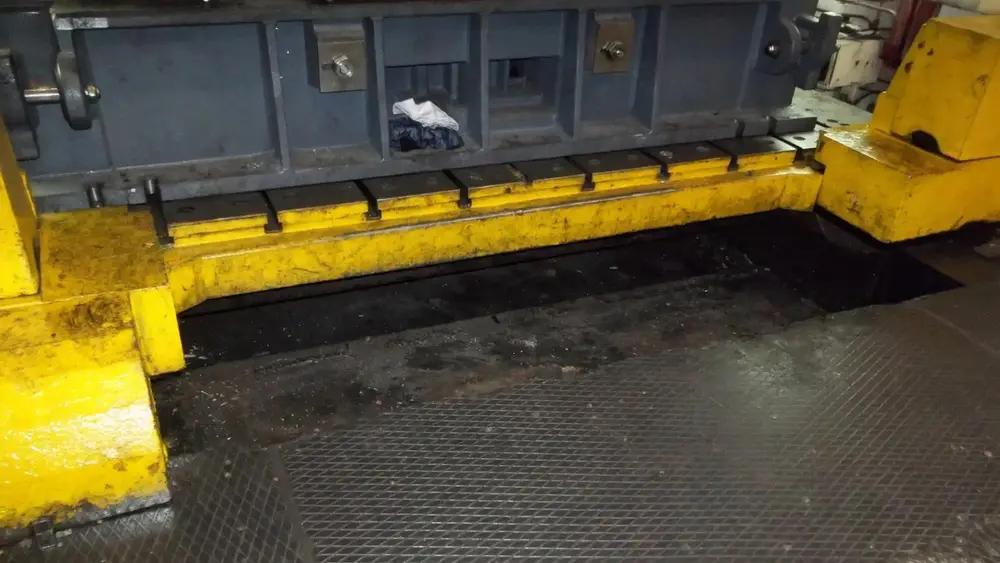
On press lines, attention usually focuses on how the workpiece enters the die and how it emerges after processing. However, the way scrap is removed from the line also directly affects production continuity and workplace safety.
When sheet metal offcuts, trimmings and other scrap leaving the die are not directed to the correct location, the problem goes beyond housekeeping. Uncontrolled scrap flow can increase operator intervention, reduce available working space, damage equipment and require the line to be stopped for cleaning.
The question is therefore not simply, “How do we collect the scrap?”
The real question is:
How can scrap leaving the die be directed to the correct location safely, with minimal operator intervention and without disrupting production?
İçindekiler Tablosu
Why Does Press Scrap Require a Dedicated System?
Scrap is a natural result of press operations. The problem is not its generation, but the lack of control over the path it follows afterwards.
The geometry, weight and direction of scrap leaving the die vary between applications. Some operations produce small trimmings, while others generate larger, irregular pieces of sheet metal.
The system used to remove this material from the production area must therefore be suited to the process.
Uncontrolled scrap flow can lead to several problems.
Increased operator intervention. When scrap becomes trapped, falls into the wrong area or accumulates, employees may need to intervene in the production area to clear the system.
Disrupted production continuity. If scrap needs to be cleared manually at regular intervals, this directly creates non-productive time.
A cluttered production area. On lines where scrap is not directed to a designated collection point, it may accumulate around bins, containers and other collection equipment.
Risk of equipment damage. Scrap that moves uncontrollably or falls into the wrong area can damage nearby systems and mechanisms.
Increased occupational safety risks. When scrap is not removed along a defined route, employees may need to enter the scrap area more frequently. Controlling scrap flow helps reduce these interventions and create safer working conditions.
A Scrap Conveyor and a Scrap Guidance System Are Not the Same
Although these two systems may appear similar, they perform different functions.
A scrap conveyor transports scrap from one point to another.
A scrap guidance system directs scrap leaving the die into the appropriate chute or collection point in a controlled manner.
On some lines, a conveyor alone may be sufficient. If all scrap falls into the same location and is transported to a single collection area, an additional guidance mechanism may not be necessary.
However, when scrap chute covers need to open and close, scrap must be directed into a chute, or its flow needs to be controlled in specific areas, the task involves more than transportation.
The path followed by the scrap must also be managed.
A scrap guidance system therefore does not necessarily replace a conveyor. The two systems can perform different functions within the same scrap removal process.
When Does a Manual Scrap Chute Cover Become a Problem?
In simple systems, operators may open and close scrap chute covers manually.
This method may be sufficient for low-cycle or infrequently used applications.
As production frequency increases, however, the manual operation becomes a recurring part of the process.
If the operator must regularly adjust the cover to manage scrap flow, several questions should be asked:
- How frequently is the cover opened and closed?
- Does this require an interruption to production?
- Does the operator need to approach the scrap area regularly?
- Can the cover be left in the wrong position?
- Can scrap fall outside the chute?
- Does manual intervention increase employees’ risk of contact with scrap?
If several of these questions reveal problems, the issue is no longer simply a chute cover.
A manual task has become a repeatedly occurring part of the production cycle.
At this point, automating the scrap guidance operation should be considered.
What Does Pneumatic Scrap Chute Cover Automation Change?
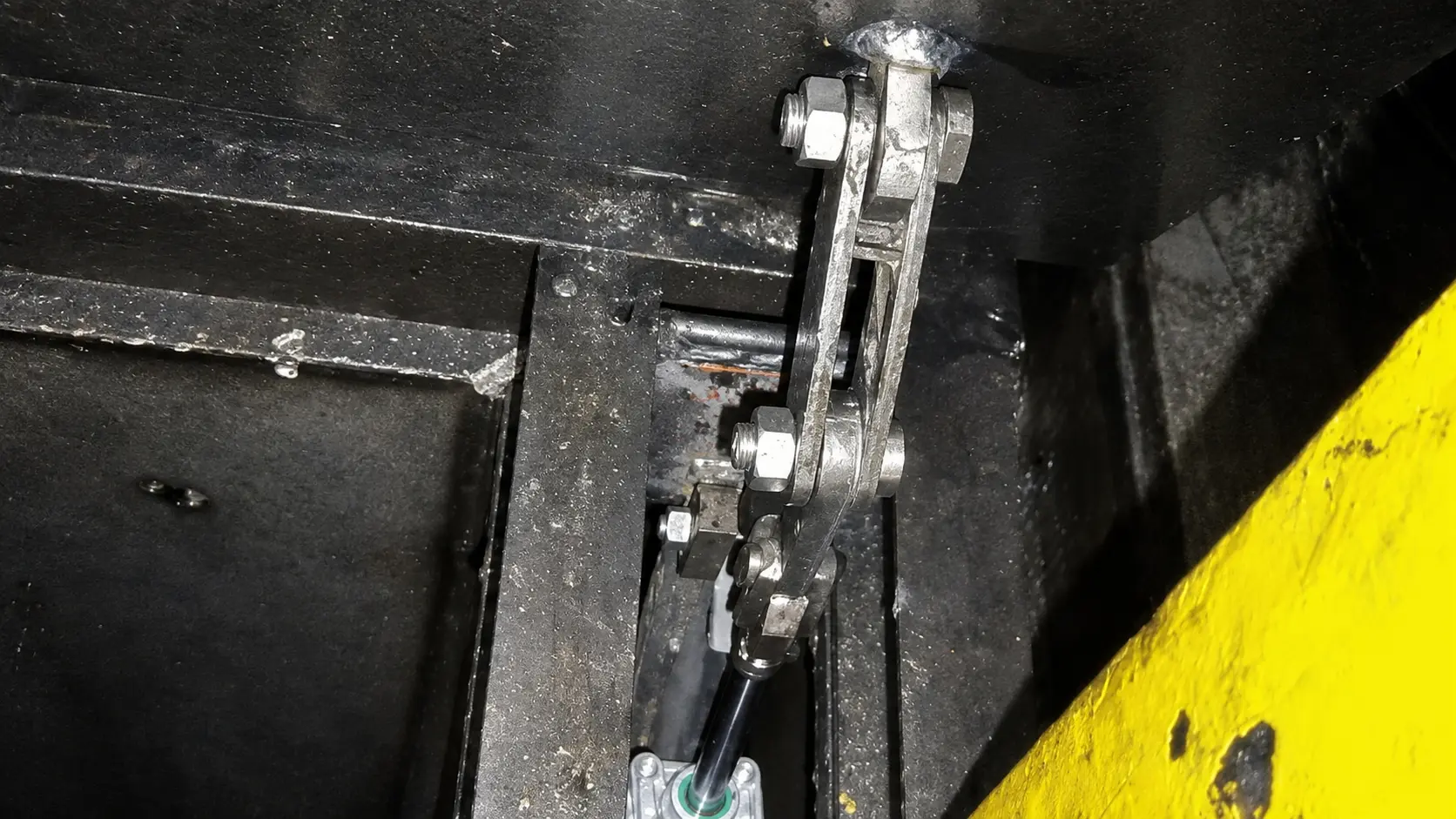
Using a pneumatic system to open and close previously manual scrap chute covers makes the scrap guidance operation more controlled and repeatable.
In some applications, the cover may require a long travel distance. Instead of using long-stroke cylinders, Meşe Makina designs special mechanisms that allow these systems to operate with shorter-stroke pneumatic cylinders.
This approach achieves the required cover travel mechanically while allowing the pneumatic system to be designed for efficient, long-term operation.
It offers several practical benefits.
Cover Movement Becomes Standardised
In a manual system, the operator is responsible for ensuring that the cover is in the correct position at the correct time.
In a pneumatic system, cover movement becomes controlled and repeatable.
Scrap guidance therefore no longer depends on a task that the operator must repeatedly perform by hand.
Operator Intervention Can Be Reduced
The scrap area is not a location where employees should need to remain routinely.
Automatic cover operation can reduce the need for operators to approach this area solely to manage scrap flow.
This is particularly important on high-cycle press lines, both operationally and in terms of workplace safety.
Scrap Flow Becomes More Controlled
Opening the scrap chute alone is not enough. Scrap leaving the die must also be directed into the chute area in a controlled manner.
Cover movement and the route followed by the scrap must therefore be considered together.
Why Are Telescopic Scrap Guidance Covers Used?
Opening the scrap chute cover is only one part of scrap removal.
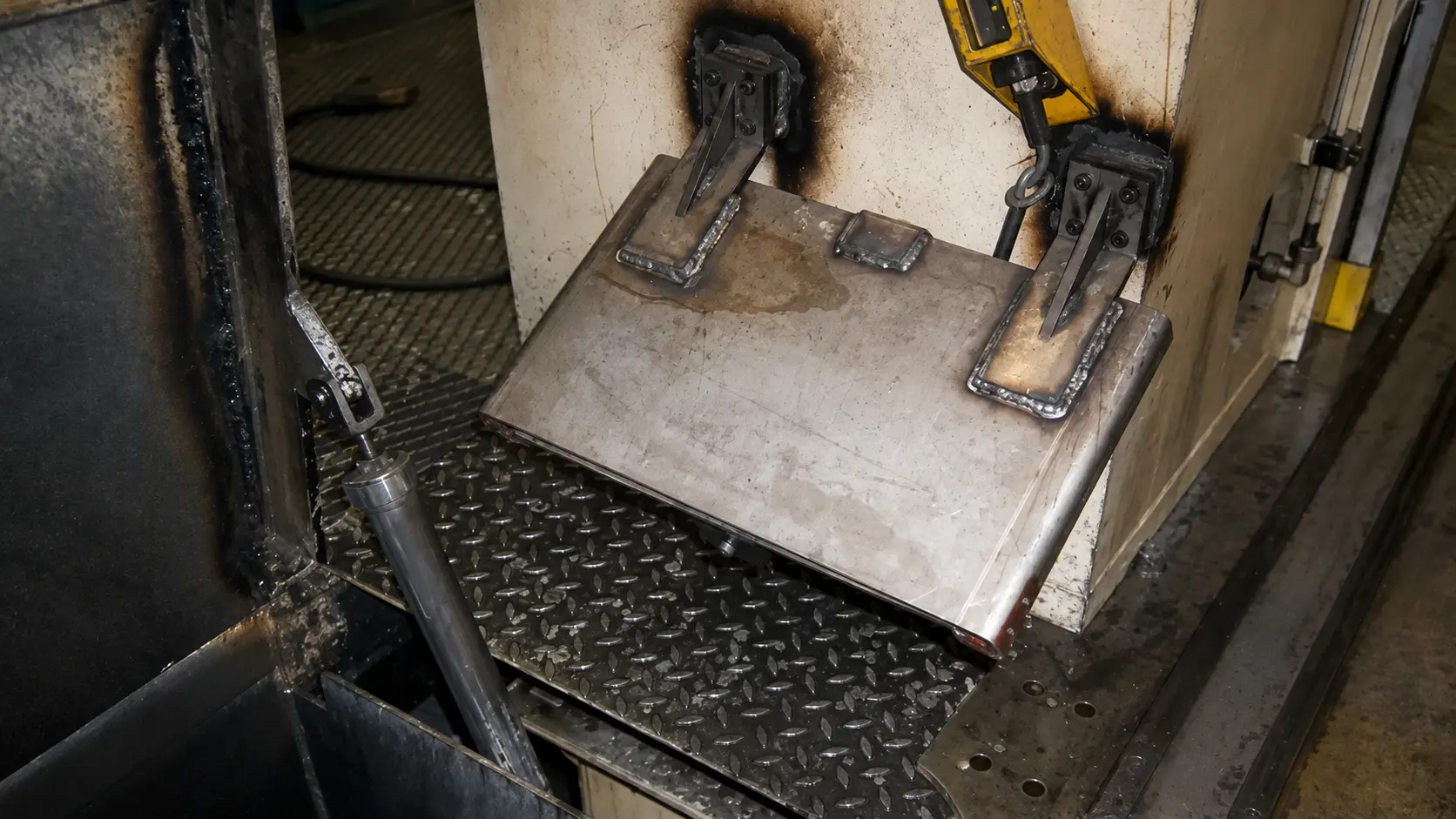
As sheet metal offcuts move from the die towards the chute, they must also be prevented from striking nearby systems and damaging equipment.
This is where telescopic scrap guidance covers come into use.
These covers help direct scrap into the chute area while reducing the risk of damage to surrounding systems and equipment caused by uncontrolled scrap movement.
The purpose of the design is therefore not simply to ensure that scrap reaches the chute.
It is to control the entire path from the die to the collection point, taking both process reliability and equipment protection into account.
Why Is Safe Scrap Flow Important?
Scrap guidance should not be viewed solely as an efficiency issue.
If operators need to:
- Manually clear accumulated scrap
- Frequently adjust chute covers
- Free pieces trapped in the scrap area
- Approach the scrap flow during production
then an auxiliary process has become dependent on employee intervention.
The objective of safe scrap handling is to remove scrap from its point of generation in a controlled manner and minimise the need for employees to intervene routinely in this area.
An effective scrap guidance system therefore improves production flow while also reducing unnecessary interaction between employees and scrap.
When Is a Scrap Guidance System Required?
Not every press line requires an automatic scrap guidance system.
The decision should be based on how production operates.
A Simple System May Be Sufficient If:
- Scrap volumes are low.
- Scrap is collected at a single, defined location.
- Manual intervention is infrequent.
- Intervention does not affect production flow.
- There are no recurring problems with scrap damaging equipment or falling into the wrong area.
An Automatic Guidance System Becomes More Appropriate If:
- The production cycle rate is high.
- Scrap chute covers are frequently opened and closed manually.
- Operators regularly need to intervene in the scrap area.
- Scrap occasionally falls into uncontrolled areas.
- Scrap pieces could damage surrounding systems.
- Scrap removal has become a factor affecting production continuity.
- Reducing manual intervention is an occupational safety objective.
The key distinction is this:
When an occasional auxiliary task becomes frequent and requires repeated operator intervention, it becomes a candidate for automation.
What Should Be Considered When Designing the System?
A scrap guidance system consists of more than a pneumatic cylinder and a cover.
An effective system must be designed around the actual behaviour of scrap on the press line.
Scrap Geometry
The first step is to identify what the system will handle.
Small trimmings behave differently from large, irregular sheet metal offcuts.
The following scrap characteristics affect the mechanism design:
- Size
- Shape
- Weight
- Surface properties
- Direction of discharge from the die
The Scrap Fall Path
Where does the scrap move after leaving the die?
Can it reach the chute area directly?
Could it strike other surfaces or equipment as it falls?
Which systems could be put at risk by an uncontrolled piece of scrap?
The assessment should therefore cover the entire path from the die to a safe area, rather than only the final collection point.
Chute and System Layout
The press frame, existing chutes, conveyors, columns and other press shop equipment directly affect the geometry of the scrap guidance mechanism.
The system must be engineered to suit these physical conditions.
Cover Movement
How far does the cover need to move?
How quickly should it open and close?
What position should it be in while scrap passes through?
Is there a risk of collision with nearby equipment during movement?
These questions require the mechanical and pneumatic design to be considered together.
Equipment Protection
It is important not only for scrap to reach the correct location, but also for it to avoid damaging surrounding systems along the way.
The guidance geometry, cover positions and protective mechanisms should therefore be assessed according to the potential movement of the scrap.
Can the System Be Retrofitted to an Existing Press Line?
Yes. Scrap guidance systems are not limited to new press lines.
With Meşe Makina’s solution, existing manually operated scrap chute covers can be converted to pneumatic operation, allowing scrap guidance to be automated.
The presence of manual chute covers on an existing line does not mean that the entire system must be replaced. A retrofit project can be developed around the existing structure through suitable mechanical and pneumatic modifications.
In these applications, the existing chute geometry, cover travel distance, available space beneath the press and scrap route are assessed together.
A major advantage of retrofitting is that it can focus on the scrap guidance section requiring manual intervention, without replacing the entire production line.
How Should You Evaluate the Investment?
Because a scrap guidance system is not the main machine producing parts, it may receive less attention when investment priorities are assessed.
However, three areas should be considered to understand its actual impact.
Production Continuity
How frequently is production interrupted for scrap clearing or guidance?
How much time is lost when seemingly minor interventions are added up over the course of a day?
If the main production process has to wait for scrap removal, the auxiliary system is already affecting production capacity.
Operator Intervention
How many times do employees enter the scrap area during production?
Are these interventions unavoidable, or could they be reduced with an appropriate mechanical and pneumatic solution?
Reducing repetitive manual intervention should be evaluated in terms of both workflow and occupational safety.
Equipment and Material Protection
Does uncontrolled scrap movement damage nearby equipment?
Do scrap pieces entering the wrong area cause blockages, breakdowns or additional cleaning?
The frequency of these events should also be included in the investment assessment.
A Short Checklist for Your Production Line
- Does scrap follow a defined and controlled route after leaving the die?
- Are scrap chute covers opened and closed manually by the operator?
- Do employees need to intervene in the scrap area regularly?
- Does scrap occasionally leave the designated area?
- Is there a risk of scrap striking or damaging nearby equipment?
- Does scrap cause blockages or create a need for cleaning?
- Does scrap removal slow down production flow?
- Would reducing manual intervention improve workplace safety?
- Could converting existing manual chute covers to pneumatic operation improve the process?
- Will the existing system remain adequate if production capacity increases?
If several of these questions reveal problems, scrap removal should be assessed as an integral part of production flow and workplace safety.

Leave A Comment