
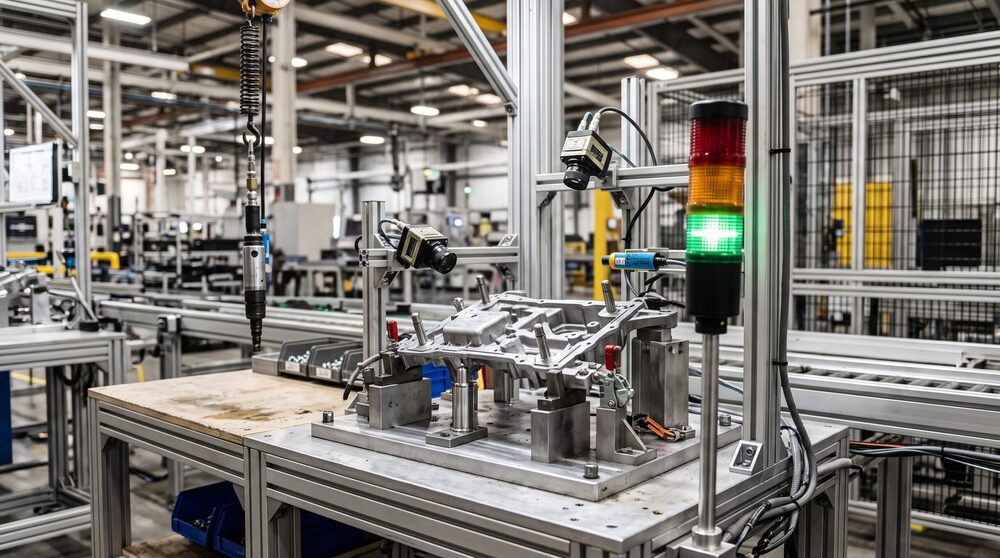
Improving quality in production is not achieved simply by detecting defective products. The real goal is to build a production system that can prevent errors before they occur. Poka Yoke machines support this approach by checking different types of errors during the production process, from the use of incorrect parts to incomplete assembly.
Especially in manufacturing fields such as the automotive supply industry, where tolerances are tight, even a small assembly or part error can affect not only the product itself but also subsequent production and shipment processes. For this reason, it is important to distribute control points throughout the process rather than relying only on final inspection at the end of the line.
Meşe Makina designs Poka Yoke machines tailored to each business and production process by focusing on these critical control points in the production line.
İçindekiler Tablosu
Why Do Errors Occur in Production?
It is not correct to explain all production errors simply as operator negligence. In many cases, the problem arises because the production system allows the wrong action to happen.
For example, if two very similar parts can both be placed in the same fixture, if left-hand and right-hand parts can easily be mixed up, or if a product can move to the next station even when an assembly step has been skipped, these all indicate weaknesses in process design.
Production errors may generally stem from human, material, process, or equipment-related causes. Fatigue and lack of attention can lead to operator-related errors, while incorrect part usage, missing components, an incorrect operation sequence, improper torque, or a sensor setting drifting out of adjustment can all create different types of defects.
At this point, the goal is not to expect flawless performance from the operator in every cycle, but to design the production system in a way that prevents the wrong action from taking place.
How Do Poka Yoke Machines Work?
Poka Yoke systems generally use two basic approaches: error prevention and error detection.
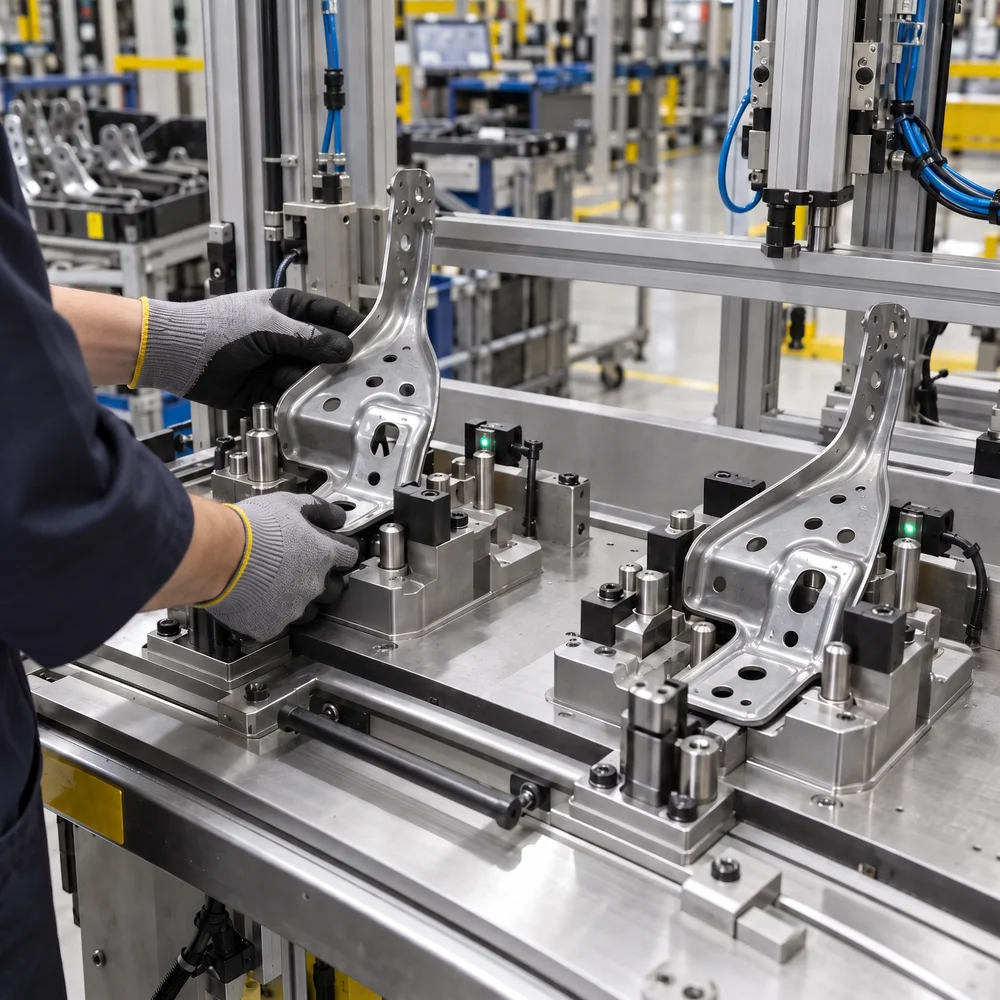
In the prevention method, an incorrect action is physically or logically impossible. For example, thanks to an asymmetrically designed fixture, a part can only be placed in the correct orientation.
In the detection method, a sensor, camera, or another control system identifies the error. The system prevents the part from moving to the next operation, warns the operator, or diverts the part to a reject area.
| Method | How It Works | Example |
|---|---|---|
| Contact Control | The part’s shape, size, or position is physically verified | Thanks to an asymmetric fixture, the part cannot be installed in reverse |
| Fixed-Value Control | It checks whether a defined number of operations has been completed | The part cannot leave the station until all four bolts have been tightened |
| Sequence Control | It verifies that operations are performed in the correct order | The next step cannot begin until the previous operation has been completed |
| Sensor-Based Control | The presence and position of the part are verified by sensors | If a clip is missing, the cycle cannot start |
| Vision Inspection | A camera checks the label, orientation, and surface | A product with the wrong label is separated from the line |
| Torque and Force Monitoring | Tightening torque or pressing force is measured | Torque outside the specified limit sends the part to the reject area |
How Is an Error-Prevention System Set Up?
In a Poka Yoke application, the first step is not to choose a machine or sensor directly. First, it is necessary to determine which errors occur in production and at which point those errors arise.
Recording the Errors
Internal reject records, rework causes, customer feedback, and problems encountered during production should be reviewed. This makes it possible to see which types of defects are concentrated in which operations.
Identifying the Root Cause
The statement “the operator made a mistake” is not enough on its own. It is necessary to investigate why the part could be installed incorrectly or why the operation could be skipped.
For example, the real problem is that both the correct and incorrect part can be placed in the same fixture. The Poka Yoke design should eliminate exactly this issue.
Selecting the Critical Control Point
The control should be placed as close as possible to the point where the error occurs. This prevents the defective part from moving on to subsequent production stages.
Determining the Appropriate Control Technology
In some processes, a simple mechanical fixture is sufficient, while in others a sensor, camera, torque control system, or PLC integration is required.
The goal here is not to build the most complex system, but to use the solution that reliably prevents the relevant error.
Verifying the System
Once the Poka Yoke system has been set up, it should be tested in a controlled way with defective parts. It should be checked regularly whether the system really detects the wrong part or incomplete operation, whether it stops the production cycle, and whether the defect is recorded.
It is also important that the system cannot be easily bypassed by the operator; otherwise, it may lose its function during periods of high production intensity.
Poka Yoke Applications in the Automotive Supply Industry
In the automotive supply industry, running different product variants on the same production line increases the risk of errors.
Right-hand and left-hand part variants are a good example. When the fixture is designed to accept only the correct part, the operator cannot place the wrong variant.
The presence of small components such as clips, nuts, or seals can be verified by sensors. By controlling the assembly sequence, the next step can be prevented from starting before the required previous operation has been completed.
In press operations, if the part is not in the correct position inside the die, the cycle does not start. In this way, not only defective production is prevented, but also undesirable situations that could affect the die and equipment.
Error Control in Case Packing Systems
The case packing operation performed after production is completed is also an important control point.
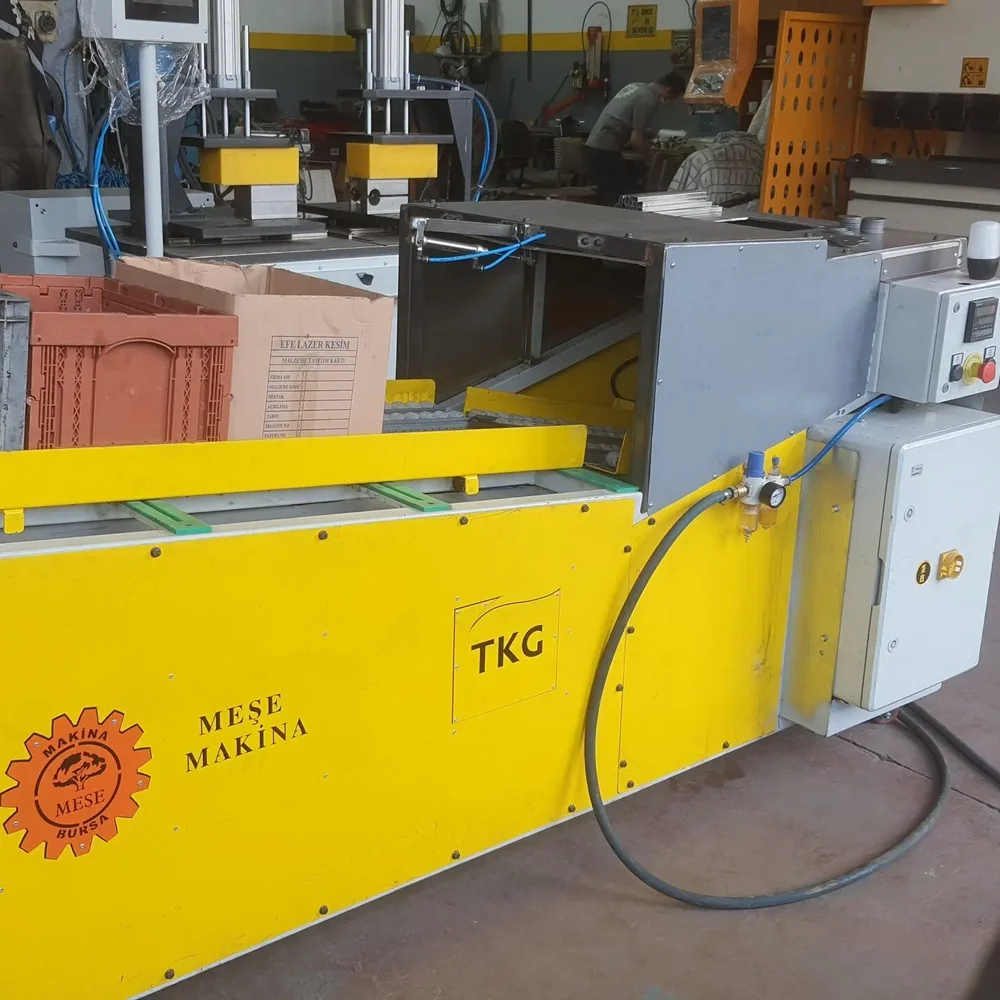
Verifying the product before it enters the case prevents defective parts from reaching the shipment package. At the same time, the quantity in the case can be checked automatically, preventing cases with missing products from being shipped.
For this reason, the Poka Yoke approach can be used not only in production or assembly operations but also in the case packing stage at the end of the line. Poka Yoke-integrated case packing systems provide this control at the final point before shipment.
What Do Poka Yoke Systems Bring to a Business?
A properly designed Poka Yoke system makes quality control a natural part of the production line. Since defective parts are less likely to move to subsequent operations, scrap, rework, and the quality control workload are also reduced.
At the same time, instead of requiring the operator to check every detail continuously, the system verifies critical operations. This makes it easier for new operators to adapt to the production process, while the recording of completed operations supports production monitoring and traceability.
The Goal Is Not Just to Detect Errors, but to Prevent Them
Achieving a low defect rate in production does not simply mean inspecting more products at final control. The stronger approach is to prevent the wrong action from occurring or to stop a defective part from progressing to the next stage through the system itself.
Poka Yoke machines enable errors to be controlled at their source by integrating fixtures, sensors, vision inspection, torque control, and automation systems into the production process.
Meşe Makina analyzes the production line and process requirements, then designs and manufactures custom Poka Yoke machines and automation solutions suitable for critical control points. The goal is not only to detect errors, but to create a more controlled and traceable production structure that does not allow errors to continue through the production process.
You can contact us to determine the right Poka Yoke solution for your production line.

Leave A Comment