
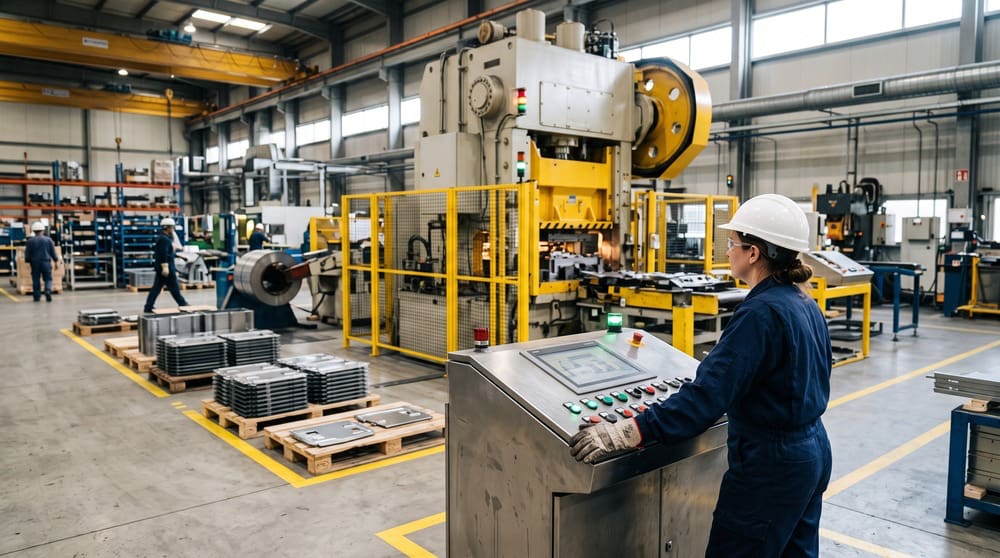
Production in press shops relies not only on powerful machinery but also on correct operation and safe working practices. Sheet metal processing and press operations typically involve repetitive movements. As a result, operator errors can directly affect both production efficiency and workplace safety. Incorrect feeding, improper part placement, timing errors, and lapses in attention can contribute significantly to production defects and machine damage.
Modern machine design therefore aims to do more than increase production capacity. Making operator intervention more controlled and developing systems that reduce the likelihood of errors have also become important objectives. Ergonomics, automation, and safety systems play a particularly important role in preventing operator errors in press shop machinery.
You may also be interested in: Choosing Machinery to Speed Up Workflow in Press Shops
İçindekiler Tablosu
Ergonomic Machine Design
Many operator errors are related to ergonomics. When the workspace does not accommodate the operator’s natural movements, it can lead to reduced concentration during long shifts.
Ergonomically designed machines include features such as:
- Control panels within easy reach
- A machine structure that provides a clear view of the work area
- Easily accessible part-loading areas
- A comfortable working height that minimizes physical strain
These design features make the machine easier for the operator to control. They also help prevent fatigue-related errors during extended periods of work.
Automatic Feeding Systems
One of the most common operator errors in press shops is feeding sheet metal into the machine incorrectly or unevenly. This risk is higher in systems that rely on manual feeding.
Automatic feeding systems offer an effective solution. Sheet metal is fed consistently into the machine from a coil or feeding unit, eliminating the need for the operator to continually load material.
The advantages of these systems include:
- Consistent sheet metal feeding
- Stable production speeds
- Reduced operator intervention
- Fewer defective parts
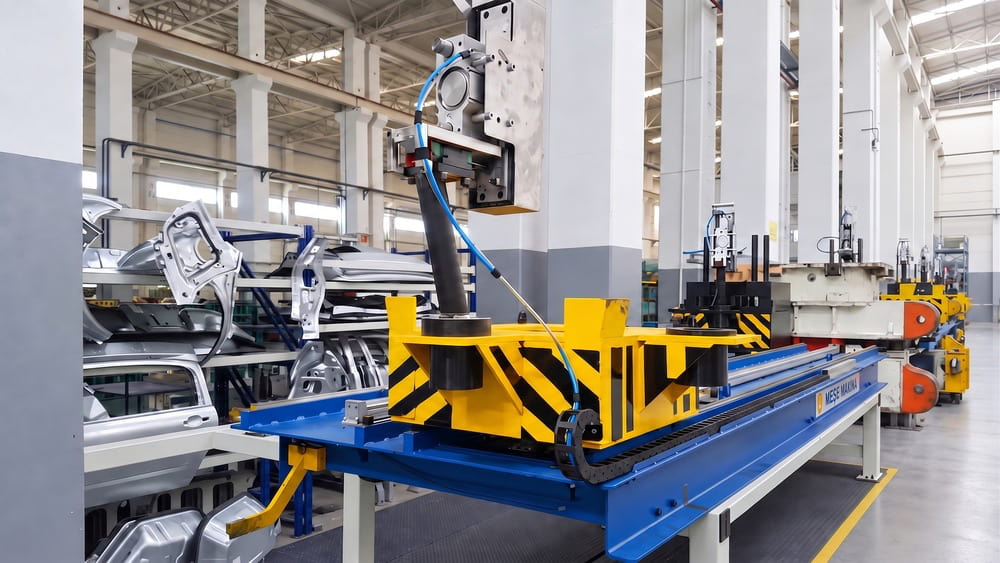
Press lines equipped with sheet metal straightening and feeding equipment allow for more controlled production.
Sensors and Safety Systems
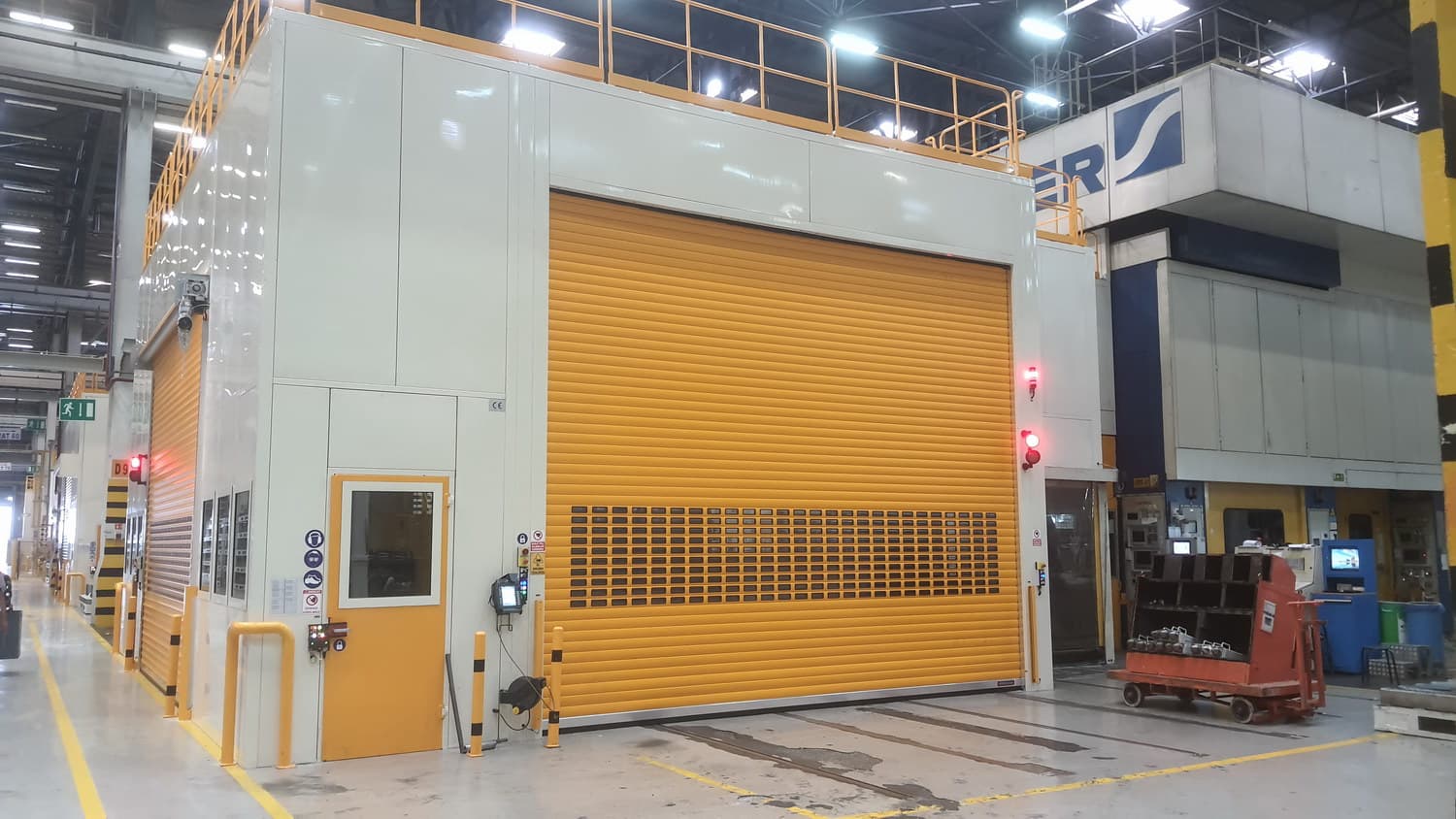
Sensor technologies are widely used in modern press machines to reduce operator errors. They help ensure that the machine operates only when the required conditions are met.
These systems can check:
- Whether the part is correctly positioned
- Whether safety guards are closed
- Whether the operator’s hand is within a hazardous area
- Whether the sheet metal is feeding correctly
When an abnormal condition is detected, the machine stops automatically. This helps significantly reduce the risk of workplace accidents and production defects.
Automation That Reduces Operator Intervention
As technology has advanced, automation systems have become increasingly common in press shops. Robot-assisted press lines and automatic transfer systems minimize the need for operator intervention.
In these systems, the operator’s role primarily involves monitoring production and controlling the system. Part loading, transfer, and unloading are performed automatically.
The benefits include:
- Reduced human error
- Increased production speed
- More consistent production quality
- Improved workplace safety
Automation can make a substantial difference, particularly on press lines used for mass production.
Standardized Control Panels
Complex control systems are another cause of operator errors. When different machines use different operating logic, operators may perform the wrong action.
For this reason, modern machine designs increasingly feature simpler, more intuitive control panels. Button functions are clearly labeled, and controls are arranged in a layout that operators can learn easily.
Standardized control panels offer several advantages:
- Operators learn to use the machine more quickly
- The risk of pressing the wrong button is reduced
- Changeovers between operators require less adjustment time
This helps production run more safely and consistently.
The Impact of Effective Machine Design on Production
Production quality in press shops does not depend solely on the power of the press. How well the machine’s design accommodates the operator directly affects production efficiency.
Combining ergonomic design, automatic feeding systems, sensor technologies, and automation can significantly reduce operator errors. This improves production safety and helps preserve the machine’s service life.
Manufacturers working in sheet metal processing and press technology consider these factors when developing their machines. Experienced companies such as Meşe Makina prioritize solutions that improve production efficiency while minimizing operator errors.
Effective machine design meets today’s production needs while also creating a safer, more sustainable manufacturing environment over the long term.

Leave A Comment