
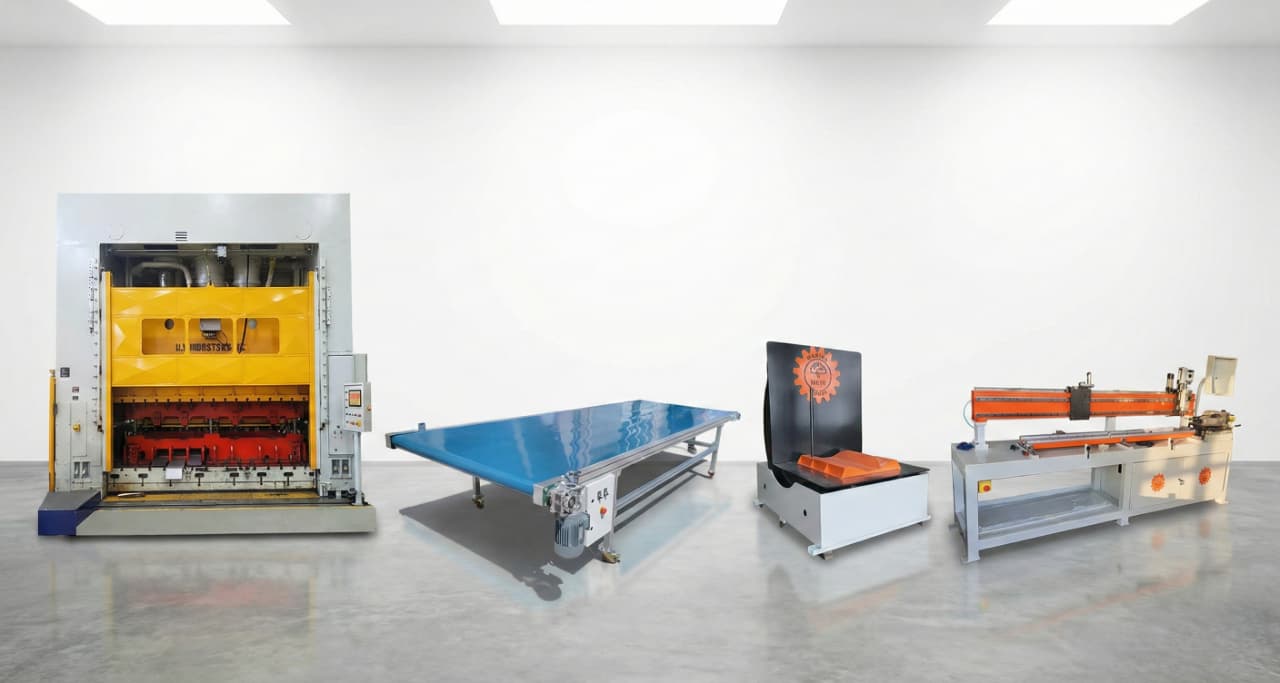
Machinery investments are not simply purchasing decisions made to meet a company’s current production needs. They are also strategic steps that affect a company’s production capacity, cost structure, delivery times, and competitiveness in the long term. For this reason, focusing only on present needs is not enough when making machinery investments. To make the right decision, it is necessary to think not only about today, but also about the future.
Many businesses invest in machinery to solve an existing production problem or to increase capacity quickly. However, investments based only on short-term needs may become insufficient over time. When production volume increases, product variety changes, new customer demands arise, or different production standards come into effect, unplanned investments may return to the business as additional costs and time loss. That is why long-term planning in machinery investments is one of the key elements of efficient and sustainable growth.
İçindekiler Tablosu
Why is it necessary to think long term?
A machinery investment is often a high-cost decision. The purchase price, installation expenses, maintenance requirements, energy consumption, operator training, and possible revisions are all part of that investment. In other words, the issue is not simply buying a machine. What really matters is how much the selected solution will contribute to the business over the years.
Some decisions made with a short-term perspective may seem suitable at first. However, within a few years, problems such as insufficient capacity, lack of production flexibility, rising maintenance costs, or inability to respond to new needs may arise. This may force the business to invest again or allocate additional budget to modify the existing system.
Long-term planning aims to ensure that the investment is compatible not only with today’s conditions, but also with future production goals.
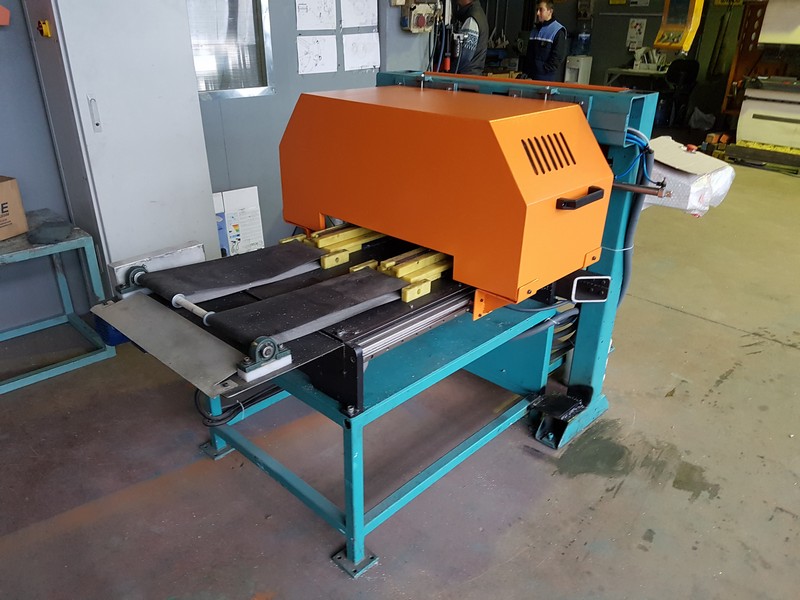
A machinery investment is not only about capacity
When selecting a machine, the first factor that usually draws attention is capacity. Of course, this is important. However, in long-term planning, capacity alone is not enough. There are other factors that determine how beneficial a machine will be for the business in the future.
Production flexibility is one of them. If the business may shift toward different products in the future, it should be considered how well the selected machine can adapt to that change. Likewise, integration into the production line, compatibility with automation infrastructure, ease of maintenance, and access to spare parts are also important in the decision-making process.
A machine that seems sufficient today may become restrictive tomorrow when faced with higher order volumes, the need for more precise production, or different product structures. For this reason, the investment decision should take into account not only the current production picture, but also the future direction of the business.
How should future production goals be evaluated?
When making a long-term plan, the following questions should first be answered clearly:
Does the business aim to increase its capacity over the next few years? Does it want to reach new customer groups? Is there a possibility of producing with different materials or in different sizes? Is greater automation in production being targeted?
The answers to these questions directly affect the direction of the investment decision. Some machines may be sufficient to meet current needs, while others may be preferred because they support both current operations and future growth.
The important point here is not to make an excessively large investment, but to find a balanced solution between current needs and growth plans. Systems that are larger than necessary may create cost pressure. Solutions that are too small may become inadequate in a short time. Long-term planning aims to establish exactly this balance.
Why should total cost be considered?
Although the initial purchase price is important in a machinery investment, it should not be the only determining factor. A machine with a lower purchase price may create higher operating expenses in the long run. That is why the total cost of ownership should be considered.
A machine that consumes a lot of energy, requires frequent maintenance, causes long downtime in the event of a breakdown, or makes spare parts difficult to obtain may become more expensive than expected over time. In addition, systems that are more prone to operator error may also affect production quality.
Businesses that plan for the long term evaluate not only the purchase price, but also maintenance, service, energy, training, spare parts, and possible downtime costs together. In this way, an investment that seems expensive at first may actually prove to be a more efficient and more economical solution.
Why are infrastructure and integration important?
A new machine usually does not operate on its own. It must work in harmony with the existing production line, facility infrastructure, energy system, operator arrangement, and other equipment. If long-term planning is not done, these compatibility issues may only become apparent after the investment.
For example, a machine that does not physically fit into the production line, does not suit the existing workflow, or cannot communicate efficiently with other systems may fail to provide the expected benefit. Likewise, if a transition to automation is planned for the future, the new machine should be suitable for that transformation.
Therefore, the investment decision should be evaluated not only according to the machine’s technical features, but also according to the overall structure of the business.
Why should the possibility of revision and development be considered?
Thinking about the future in machinery investments does not only mean aiming for greater capacity. It is also important that the system can be updated and improved later on.
Some machines, thanks to their modular structures, can adapt more easily to new needs. Others may require major changes once they reach a certain usage limit. As the business grows or production demands change, how flexible the existing system is becomes increasingly important.
For this reason, businesses that plan for the long term look not only at the current operating structure, but also at possible future revision needs. This approach extends the useful life of the investment and can delay the need for a second major investment.
Why is operational sustainability important?
It is not enough for a machine to work efficiently; it must also work consistently. A system that frequently breaks down, is difficult for operators to use, or often stops because of maintenance can disrupt production planning. This can affect many areas, from customer satisfaction to delivery times.
Long-term planning focuses not only on the technical adequacy of the investment, but also on its operational sustainability. In other words, the machine should be able to support the company’s daily workflow for years, deliver predictable performance, and avoid creating unnecessary risks.
For this reason, factors such as user-friendly design, service support, spare parts continuity, and maintenance accessibility play an important role in the investment decision.
What does proper planning bring to a business?
Machinery investments planned with a long-term perspective provide many advantages to a business. First of all, capacity increases can be managed in a more controlled way. The production line operates more smoothly. Unexpected costs are reduced. It becomes easier to adapt to new business opportunities. At the same time, investment decisions become less risky.
In addition, instead of searching for a new solution for every new need, the business moves forward on the basis of a stronger production infrastructure. This saves time, simplifies decision-making processes, and makes growth more sustainable. While developing machine solutions suitable for different production needs, Meşe Makina also prioritizes long-term efficiency.
Conclusion
Long-term planning in machinery investments is not only about thinking further ahead; it is about making better decisions. A solution that meets today’s production needs may not be sufficient in the future. For this reason, when making an investment decision, capacity, flexibility, total cost, integration, maintenance structure, and growth goals should all be evaluated together.
A properly planned machinery investment supports not only the company’s production today, but also its strength in the future. That is why a long-term perspective is not a cost in machinery investments, but an approach that creates value.

Leave A Comment